Tabula Rasa
Empowering Youth, Building Futures!
Wearing a glaringly red canvasjumper zipped to my neck and my hair in a ponytail, I anxiously walked to thecommunity building. This ridiculously oversized uniform was far fromfashionable: on the back of it were the words “Minor Protection” bolded in black.
To be fully transparent, being avolunteer for Minor Protection was not the ideal way of spending mylong-awaited winter break. Nevertheless, I tried to suppress any distractingthoughts and entered the volunteer training room. Feeling like a new kid on thefirst day of school, I stood nervously by the program leader who was about tointroduce me to the work of Minor Protection.
If I were the awkward new kid, theprogram leader, a tall woman with an honest face and firm aura, was undoubtedlythe big guy on campus. She handed me some educational brochures. I took aglimpse at them and felt secretly relieved: I had familiarized myself with mostof them prior to coming here. The program leader started to prepare the venue,and I joined her, taking out foldable tables, setting up the billboard, andsorting the brochures on the tables.
The first crowd soon arrived, andthe throng was far beyond my expectations. There were mothers lugging theirchildren, hurrying inside, old couples stepping forward slowly, primary schoolstudents rushing in flocks…The room soon became filled with people, all eagerto learn how to better protect one of the most vulnerable groups in oursociety. I didn’t really have time tohesitate—the crowd’s passion dissipated my anxiety and awkwardness.
Facing curious eyes, I took a deepbreath and started giving a presentation about the importance of educatingchildren on potential threats and harassment. As my speech began, the wholeroom fell silent, the only sound being my words amplified through themicrophone. I first emphasized that minors' lack of experience and soundjudgment makes them vulnerable to adult manipulation and crime. Then, I sharedsome new methods criminals use to lure and violate children. For example,criminals might transfer a small amount of money through the Internet tochildren and ask for their intimate photographs. If the child no longer agreesto send the photos, the previous photographs will become a threat to them. As Icontinued with my speech, I gradually felt more and more confident. Finally, Itaught some ways for children to protect themselves against various types ofcriminal activities. I was so passionate and engaged when giving thepresentation that I did not notice that thirty minutes had already passed. WhenI finished, I bit my lips anxiously and waited for any reaction from myaudience. A few seconds passed, and an applause burst out from the crowd.
I took a deep breath again, but thistime more confidently. I cleared my throat and raised my voice to ask if anyonehad questions. This was thought to be the most challenging part for me before Icame here: what if nobody raises their hand and I have to stand on the stagewith embarrassment? What if thequestions are beyond my scope of knowledge? But now, after the presentation, Ifelt like I had drunk some confidence potion and all these worries disappeared.I stood there firmly, waiting for the crowds to come up with questions. Then, Isaw one hand raising up into the air, then two, then three… The first questionwas asked by a young primary school girl. She wanted to know how to identifypeople who actually need help with directions and criminals pretending to belost. I told her that whenever an adult actually needs directions, they woulddefinitely go to other adults or security guards, instead of a small girl.After hearing my answer, she sat down thoughtfully and responded to me with acute smile. I answered the rest of the questions: some were about how toidentify criminals; some were about how to self-protect, but one common thing Irealized from all these questions, which made me really excited, is that peoplewere all interested in my presentation and were eager to learn more about theprotection of minors!
After answering all the questions,my work today had ended. I went to help clean up the publicity area, where Imet my program leader again. She gave me a thumbs-up and praised me for mypresentation. A mixture of feelings rushed into my consciousness: gratitude,excitement, and determination. I wanted to thank her for this experience. Iwanted to explain that I would like to become even more involved in minorprotection in the future.
While I was still organizing mywords, she smiled and spoke first—“Why don’t you continue to join ourminor-protection activities in the future? ” It was as if she understood allthe things I wanted to say. Her smile seemed to communicate a sense of affirmationand recognition, and looking into her eyes, I knew for a fact that I would beinvolved in this line of work for a long time.
Description: Legal outreach programssound familiar, but are never easy to carry out. Organization work often startsweeks before the date, during which a detailed proposal shall be made, relatedgroups shall be contacted (e.g., police dog show), small gifts shall beprepared, and the scheduled events shall be rehearsed. These initiatives weredesigned to reach a broad audience, including juvenile offenders, K-12students, and the general public.
For youth involved in the juvenilejustice system, the programs focus on rehabilitation and social involvement. Ioften train juvenile offenders before the program, teach them how to createcommunity flyers, and conduct Q&A sessions. In large-scale programs, Isometimes help prepare mock court sessions and organize legal discussions forthese teenagers.
Our school-based programs spannedfrom elementary to high school levels, adapting the program content to suit thespecific context. These sessions introduce students to concepts of right &responsibility, conflict resolution, and appropriate ways to seek legalprotection. Besides introductory lectures, we sometimes invite lawprofessionals to present speeches about their career paths, helping students tobetter understand law-related fields. I often help with material preparation,event coordination, discussion facilitation, and post-event follow-ups.
Outreach programs for the publicrequire us to build a deep connection with our community and are often carriedout in the form of open-air stalls. In these sessions, we spread out brochuresabout legal knowledge in the city center and organize small games to attractmore people. We often prepare questions related to the content on the brochuresand small gifts for those who answer the questions correctly. This is probablythe most tiring form of outreach program: in summer, we need to stand under thesun for hours, asking passersby to take a look at our brochure. However, it isalso the most influential form, through which we get to access hundreds ofpeople.
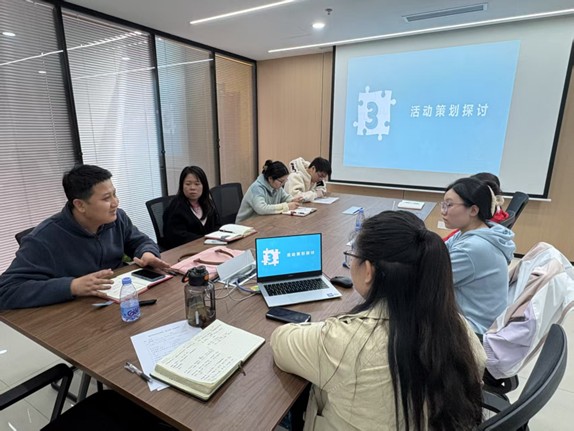
Description: For over a year, I havevolunteered as an assistant to a social worker providing psychologicalcounseling and legal guidance for juvenile offenders. Through weekly sessions,I’ve had the opportunity to interact directly with these young adults andlisten to their stories.
As an assistant, my responsibilitiesinclude helping to prepare the meeting room, delivering lectures on basic legalknowledge (e.g., how to identify a drug from everyday objects), and mostimportantly, being a supportive presence. Over time, I have developed manycommunication skills and learned how to comfort these teenagers when they areexperiencing an emotional crisis. Their story varies, but many share a commontheme: instability at home, exposure to violence, and a lack of reliablesupport.
Hearing their story is like watchinga long, endless TV series, and I find myself unable to help but compare my lifewith theirs. What struck me the most was the stark contrast between us, despiteour shared city. At the age of 12, my biggest concern was hiding novels from myparents so I could read past my bedtime. For them, it was trying to steal aphone and run away from their abusive family. These moments have altered myperspective on privilege, resilience, and the significance of mental health, and,after all, sparked my desire to continue working at the intersection ofpsychology, neuroscience, and social justice.
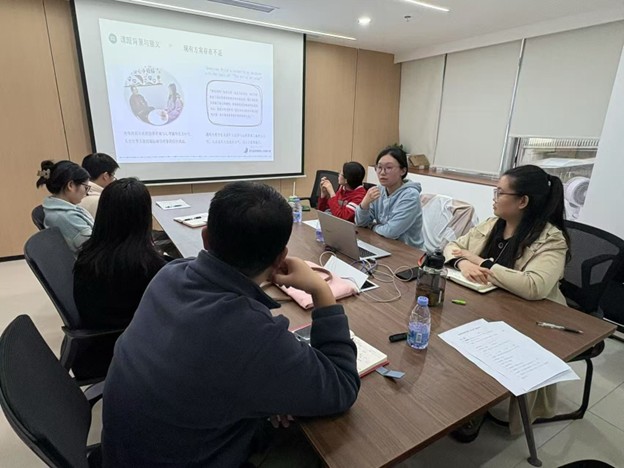
Description: During my interactionwith the social workers and juvenile offenders, I realized a gap in thejuvenile justice system in China. Most of the guidance and counseling work isdone after crimes have been committed, which cannot help prevent future crimes.Therefore, over the past two years, I led the development of an AI-basedchatbot to provide legal guidance and psychological counseling for adolescents.
Working with the ChatGLM framework,I applied prompt engineering and retrieval-augmented generation (RAG)techniques to fine-tune the model’s responses, ensuring its answers are notonly accurate but also warm and caring for underage users. I compiled over adozen legal documents, including China’sLaw on the Protection of Minors, as well as psychological counselingdatasets provided by social workers. When constructing the model, I emphasizedintegrating CBT (Cognitive Behavioral Therapy) principles into the chatbot’sreplies to increase its therapeutic validity.
I compiled the research anddevelopment of the chatbot into an organized, coherent paper, which providedetailed information about the model. The chatbot is currently undergoing itsexperimental process: social workers and school teachers are teaching teenagersto try it. Then, the social workers and teachers will provide feedback for thechatbot, and I will try my best to improve and update the model.
The chatbot is currently availablefor public testing via my website. You are highly welcome to try communicatingwith it and leave your comments below.
|
|